


When we started with this e-learning adventure we were truly ahead of our time. We were truly innovating.
Enclosing and collecting your company know-how in one place, a sort of enormous company encyclopedia, online, available at any time, has been a huge simplification, for customers but also for your employees.
But the question that I have been asked over the years has ultimately always been the same: e-learning what?
Because even today, after 13 years have passed, almost all large companies use e-learning, the Public Administration uses e-learning, state bodies use e-learning, but when I talk about my work, rarely does anyone understand what I do.
As if there was a huge gap between reality and ordinary life. Yet many people I know use e-learning, what perhaps causes confusion is the term itself, in English. And unfortunately here in Italy there is no policy that pushes languages.
This leads me to think that many people use e-learning but don’t know that it’s called e-learning. It is no coincidence that for a period we started using the term online training.
But the problem remains. We could try to change it further to: what you do/learn with online courses on the computer is e-learning, but from a marketing point of view, I see it as inconvenient 😀
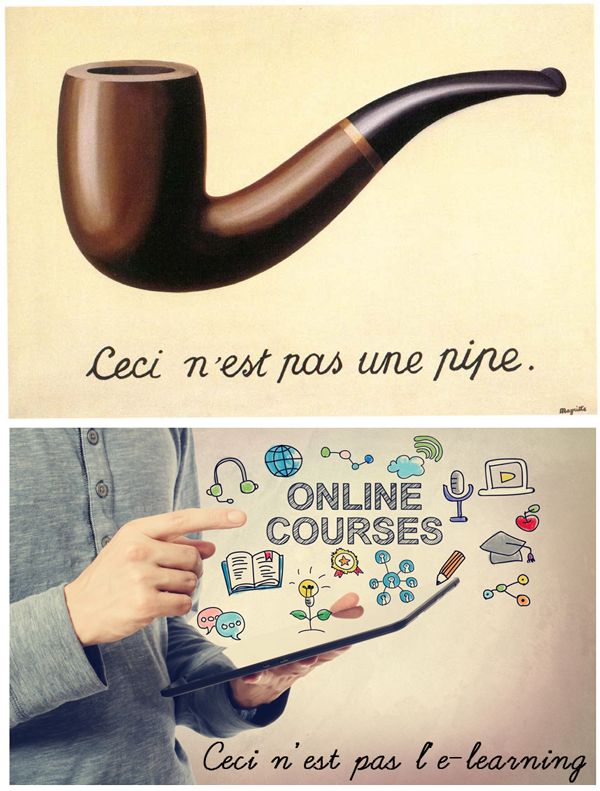
On the other hand it is a cultural problem. Italy is not an innovative country, I have been looking for a SisalPay tobacconist for days to collect a loan and what I get are head shakes and SisalChe?
Italy is not an innovative country, I have been looking for a SisalPay tobacconist for days to collect a loan and what I get are head shakes and SisalChe?
The fact is that for many people e-learning remains an unknown. And how is it done here? Informing, speaking, telling. Creating blogs like this, writing about them.
Because e-learning is actually for everyone, whatever you do/sell, it is possible to adapt e-learning to your needs. Because I talked about courses but they are not just courses, it can be an archive, a sales process, maintenance. Through new technologies it can become the starting point for teleassistance. Because innovation also continually needs to innovate.